Exploring Control Panel Varieties and Their Applications
- Ryan Patrick Murray
- Jan 13
- 4 min read

Control panels are the nerve centers of modern electrical and industrial systems. They orchestrate the operation of machinery, manage power distribution, and ensure safety protocols are followed. Understanding the different control panel varieties is essential for anyone involved in designing, procuring, or maintaining electrical systems. In this post, I will walk you through the key types of control panels, their unique features, and where they best fit in real-world applications.
Understanding Control Panel Varieties
Control panels come in many shapes and sizes, each tailored to specific operational needs. The variety depends on factors such as the environment, the complexity of the system, and the level of automation required. Broadly, control panels can be categorized based on their function, construction, and the technology they incorporate.
For example, some panels are designed for simple motor control, while others handle complex programmable logic controllers (PLCs) for automated processes. The choice of panel impacts not only system performance but also maintenance ease and safety compliance.
Common Control Panel Varieties
Motor Control Panels (MCPs): These panels manage electric motors in industrial settings. They include starters, overload relays, and protection devices.
Programmable Logic Controller (PLC) Panels: Equipped with PLCs, these panels automate complex processes and integrate with sensors and actuators.
Distribution Panels: These distribute electrical power to various circuits and protect them with circuit breakers or fuses.
Instrumentation Panels: Used for monitoring and controlling instrumentation devices, often in process industries.
Pushbutton Control Panels: Simple panels with manual controls like pushbuttons and switches for direct operation.
Each variety serves a distinct purpose, and selecting the right one depends on the operational demands and environmental conditions.
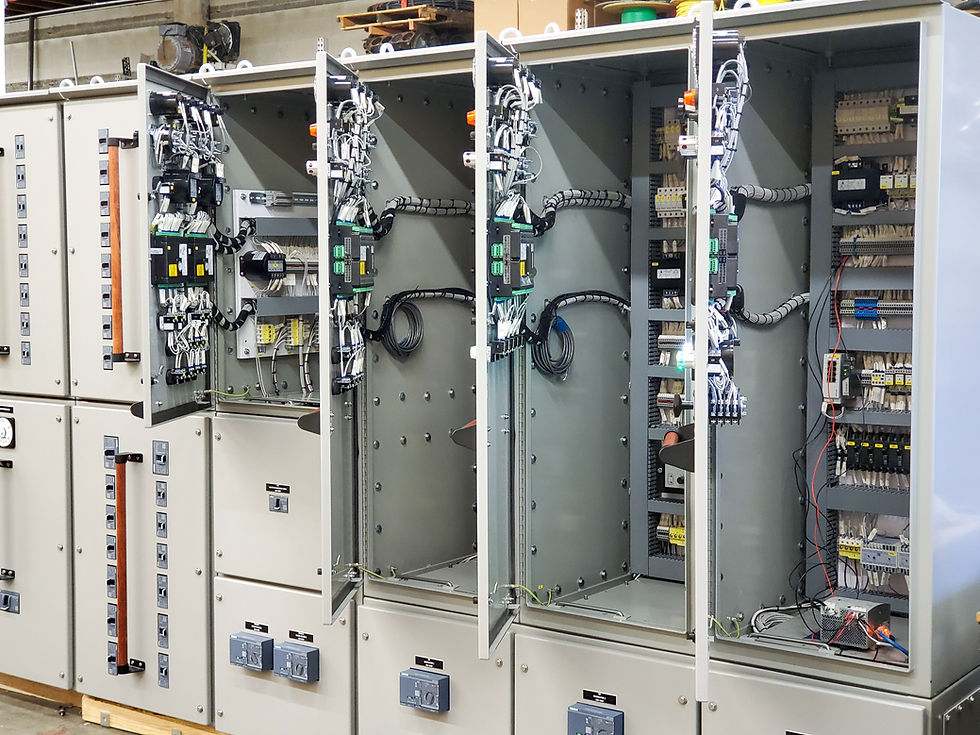
What are the three types of control panels?
When narrowing down to the most fundamental categories, three types stand out due to their widespread use and distinct functions:
Motor Control Panels (MCPs): These are essential in industries where electric motors drive machinery. MCPs provide starting, stopping, speed control, and protection for motors. They often include components like contactors, overload relays, and circuit breakers. For example, in a manufacturing plant, MCPs control conveyor belts, pumps, and fans.
Power Control Panels: These panels manage the distribution and control of electrical power within a facility. They include switchgear, circuit breakers, and transformers. Power control panels ensure that power is safely and efficiently routed to different parts of a building or plant. They are critical in commercial buildings, data centers, and large industrial complexes.
Control Panels with PLCs: These panels incorporate programmable logic controllers to automate processes. PLC panels are highly customizable and can handle complex sequences, timing, and logic operations. They are prevalent in industries like automotive manufacturing, chemical processing, and water treatment plants.
Understanding these three types helps clarify the broader landscape of control panel varieties and guides the selection process for specific applications.
Applications of Control Panels in Industry
Control panels are indispensable across various sectors. Their applications range from simple motor control to complex automation systems. Here are some key industries and how they utilize different control panel varieties:
Manufacturing: Motor control panels dominate here, managing machinery like conveyors, mixers, and robotic arms. PLC panels automate assembly lines, ensuring precision and efficiency.
Marine Industry: Control panels in ships handle power distribution, engine control, and navigation systems. They must meet stringent safety and durability standards due to harsh marine environments.
Oil and Gas: Instrumentation and PLC panels monitor and control drilling operations, pipeline pressure, and safety systems. Explosion-proof panels are common to prevent ignition in hazardous areas.
Commercial Buildings: Distribution panels manage lighting, HVAC systems, and elevators. Energy management systems integrated with control panels optimize power usage.
Water Treatment: PLC panels automate filtration, chemical dosing, and pump control, ensuring water quality and system reliability.
Each application demands specific features such as environmental protection, scalability, and compliance with industry standards.

Selecting the Right Control Panel for Your Needs
Choosing the appropriate control panel variety requires a clear understanding of your operational requirements and environmental conditions. Here are some practical considerations:
Functionality: Define what the panel must control. Is it a single motor, multiple motors, or a complex automated process?
Environment: Consider temperature, humidity, dust, and potential exposure to chemicals or water. Panels may need NEMA or IP ratings for protection.
Safety Standards: Ensure compliance with local electrical codes and industry-specific regulations. Explosion-proof or intrinsically safe panels may be necessary.
Scalability: Anticipate future expansion. Modular panels allow easy upgrades without complete replacement.
Maintenance: Opt for panels with accessible components and clear labeling to simplify troubleshooting and repairs.
Integration: If automation is involved, ensure compatibility with existing control systems and communication protocols.
By carefully evaluating these factors, you can select a control panel that maximizes efficiency, safety, and longevity.
Future Trends in Control Panel Technology
The landscape of control panels is evolving rapidly with advances in technology. Here are some trends shaping the future:
Smart Control Panels: Integration of IoT devices enables real-time monitoring, predictive maintenance, and remote control.
Energy Efficiency: Panels designed to optimize power consumption and reduce waste are gaining traction.
Compact Designs: Space-saving panels with high-density components are becoming standard, especially in urban and marine environments.
Enhanced Safety Features: Advanced diagnostics and fail-safe mechanisms improve operational security.
Customization and Modularity: Tailored solutions that can be easily reconfigured to meet changing demands.
Staying informed about these trends helps professionals make forward-looking decisions that keep their systems competitive and reliable.
Control panels are the backbone of electrical and industrial control systems. By understanding the various control panel varieties and their applications, you can make informed choices that enhance system performance and safety. Whether managing a manufacturing line, a marine vessel, or a commercial building, the right control panel is crucial for success.
For a deeper dive into the types of control panels, explore https://www.fail-safeelectric.com/

